Project: Enpompis
Author: Miquel Mariné and Sara Lopez Marquez
The Miquel Mariné team has been exploring the interaction between their prototype and the public audience in a light installation.
The project is an interactive, modular urban light prototype made from recycled reinforced polymers that reshapes public space, guides circulation, and encourages social interaction through adaptive lighting.
From its inception, the project has been structured around a dual line of research: the formal exploration of the object as a design element and the material investigation based on recycling processes. Within this framework, form is not conceived as a final outcome but as a tool closely linked to material behavior. At the same time, the project focuses on the revaluation of glass fiber reinforced polymer (FRP), understood as a secondary material with the potential to generate new responses through transformation and recombination. This establishes a continuous relationship between form and matter, where both evolve simultaneously and inform each other. As a result, the project produces not only a functional object but also an experimental system that integrates design, materiality, and sustainability.
DEVELOPMENT OF DUAL-PATH MATERIALS FROM RECYCLED FRP
The material research is developed through two main approaches, both originating from recycled FRP but aimed at generating materials with distinct properties and applications. On one hand, a lightweight, flexible, and translucent material is created by incorporating crushed glass fibers into a silicone-based matrix. This combination merges elasticity, strength, and light-transmitting qualities, making it suitable for lighting applications such as diffusers, translucent claddings, or elements designed to soften light.
On the other hand, a denser, more resistant, and opaque material is developed using a plaster-based matrix reinforced with glass fibers. This significantly improves the mechanical performance of plaster, reducing brittleness and increasing durability and load-bearing capacity. The resulting material is suitable for urban applications, including street furniture, paving systems, or playground elements. Together, these two approaches demonstrate the versatility of FRP as a recycled resource and its ability to generate innovative, application-specific materials while supporting sustainability.
E N P O M P I S small scale prototype
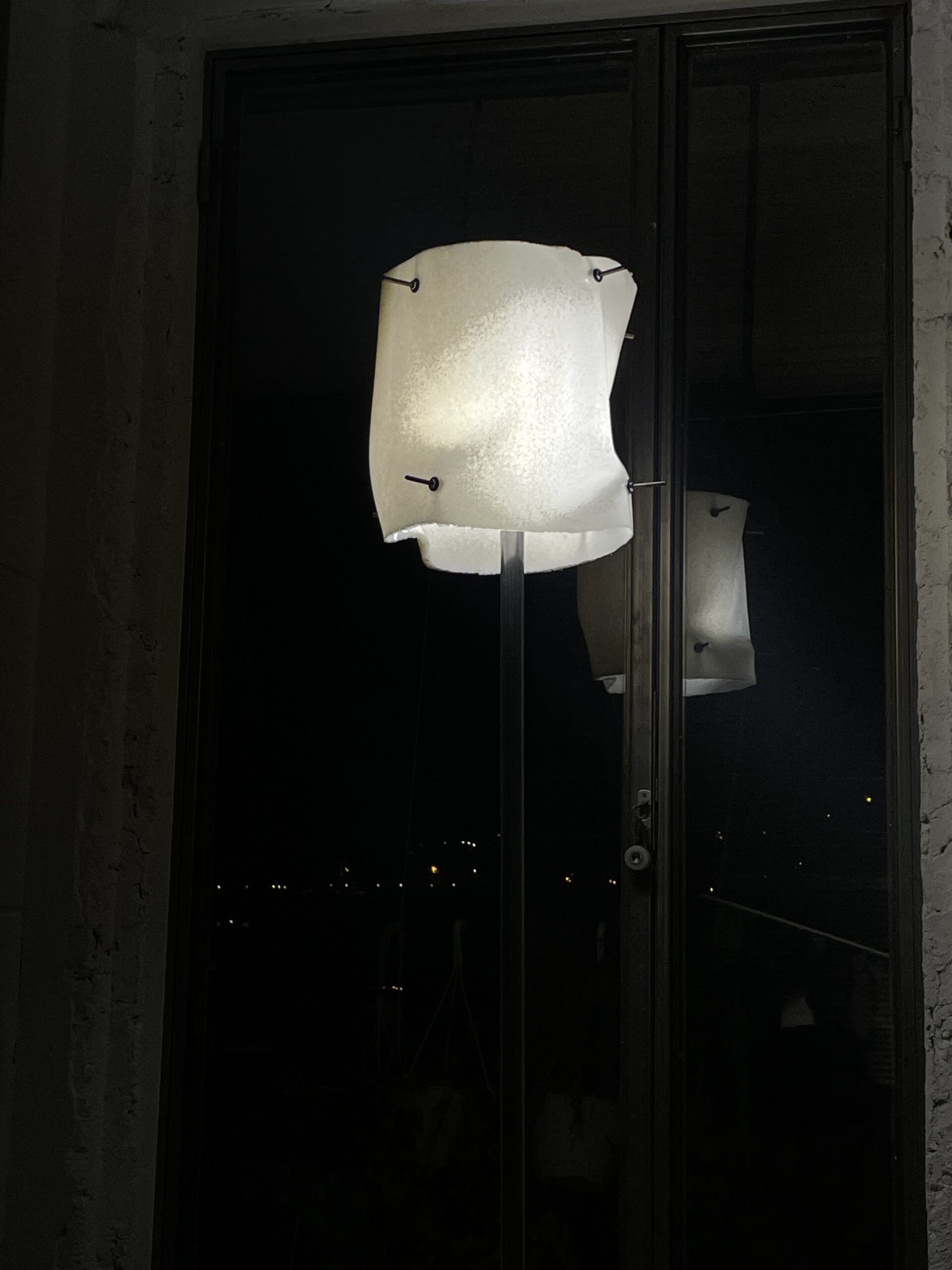
The project is materialized in a small-scale floor lamp prototype that integrates both developed materials to evaluate their structural, formal, and luminous performance. The main structure is made of adjustable steel, with a cross-shaped base that ensures stability. A triangular counterweight composed of glass fiber–reinforced plaster provides the necessary mass while enhancing the sculptural quality of the piece.
The lighting shade is produced using the silicone–glass fiber composite, offering translucency and uniform light diffusion that creates a soft and immersive atmosphere. The result is a balanced object in which each material fulfills a specific role—structure, stability, and light emission—combining technical resolution with material experimentation.
E N P O M P I S in the city
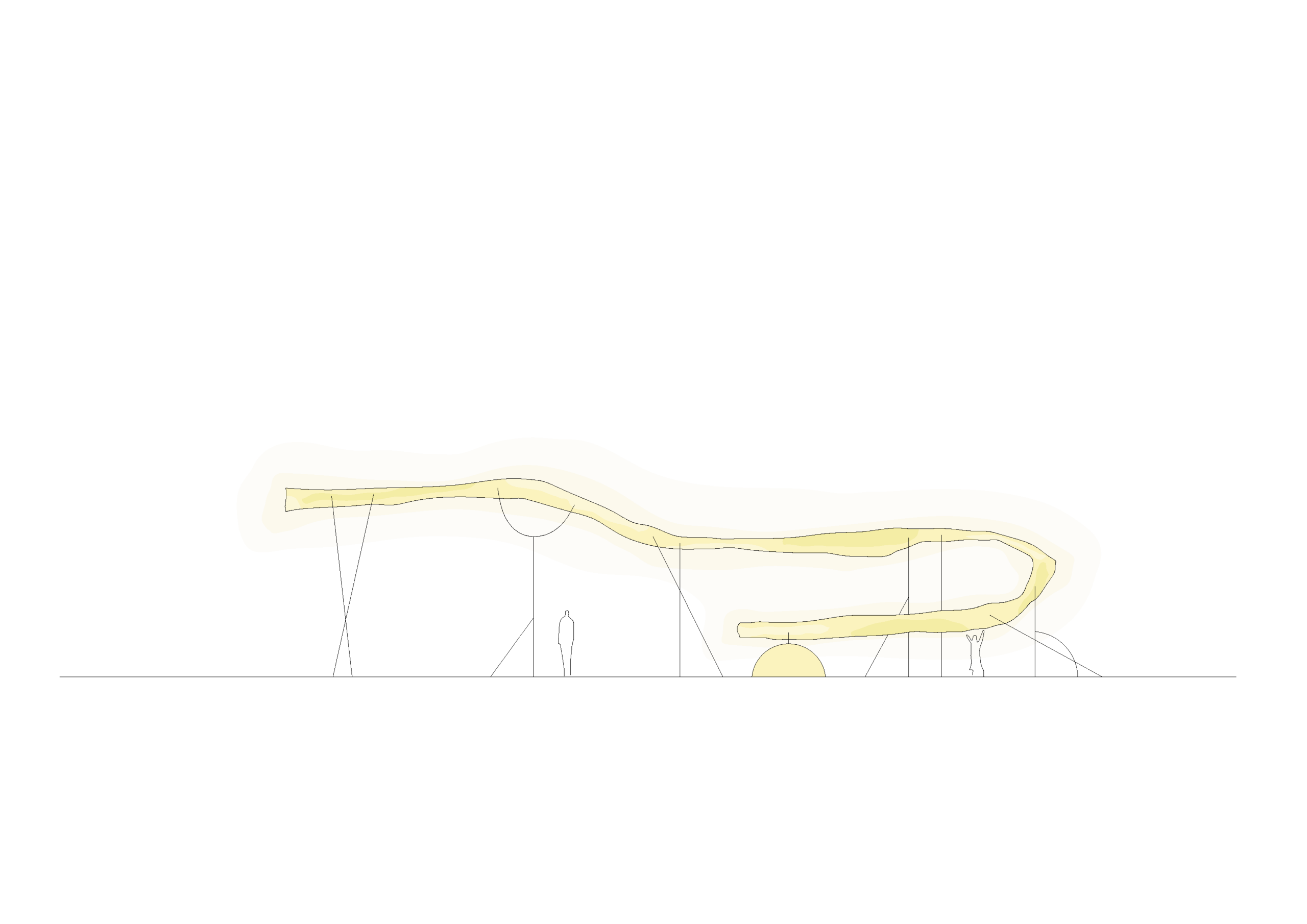
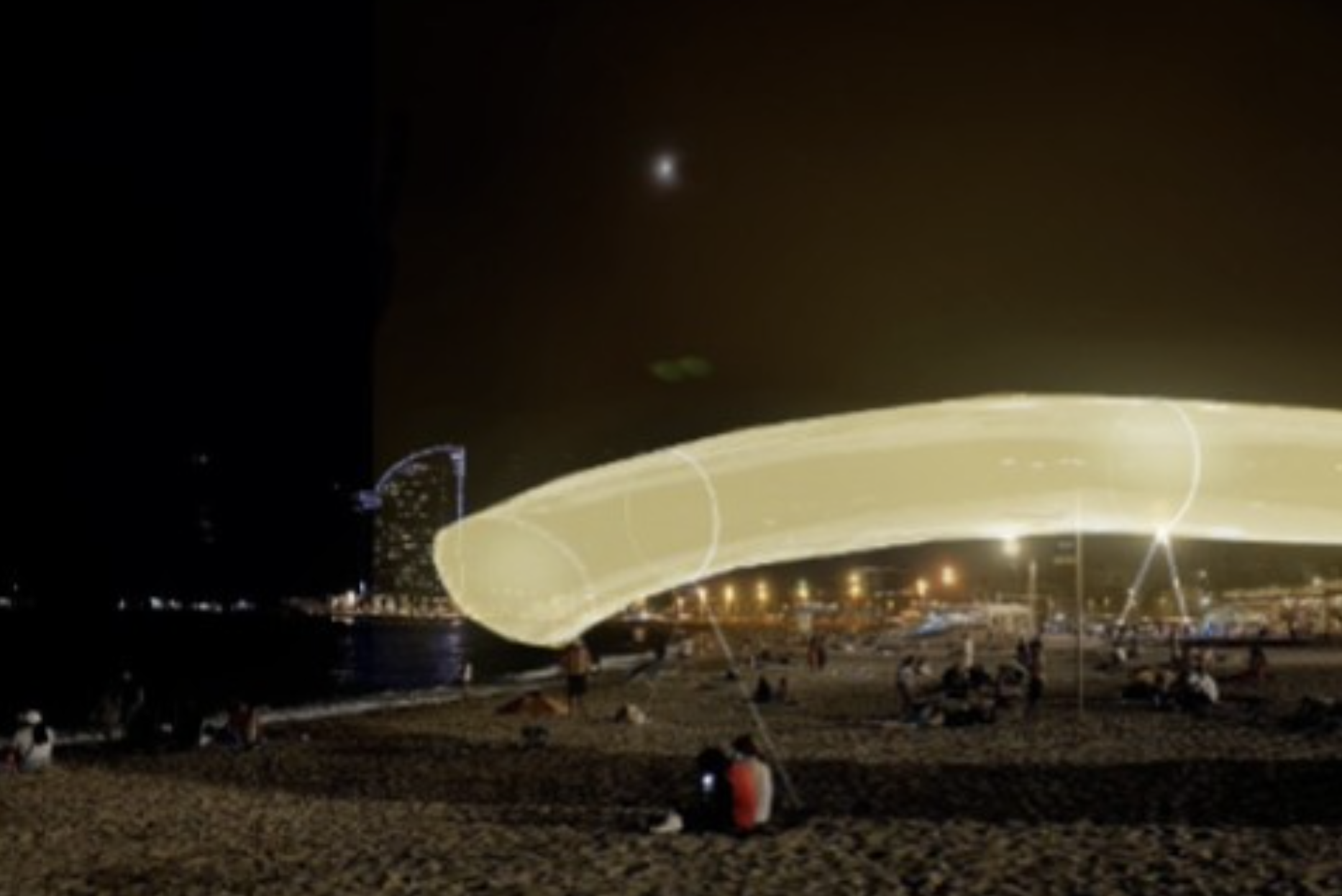
The prototype extends beyond its initial scale to become a large-scale urban element through technical adaptation and contextual reinterpretation. At a smaller scale, it operates as an object closely related to the human body; however, when enlarged, each component is redefined in relation to public space.
The composite material enables heterogeneous light diffusion, generating gradients that transform the luminaire into a linear system capable of shaping space. The steel structure takes on an active role, creating pathways, interaction zones, and opportunities for use, ultimately becoming a habitable element.
This shift in scale also transforms the object’s perception and function: it evolves from a punctual light source into an urban device that organizes space, provides shade during the day, and acts as a visual landmark and illuminated gathering point at night.